
From Concept to Completion
Our retail design process for Acler; a fashion-forward clothing brand.
Acler is an Adelaide-based label that focuses on artful tailoring and refined detail; they have a feminine-yet-strong aesthetic for the modern woman. I worked closely with their founders to execute the design vision for the first bricks and mortar store. It was a fantastic retail design project, located in Sydney CBD.


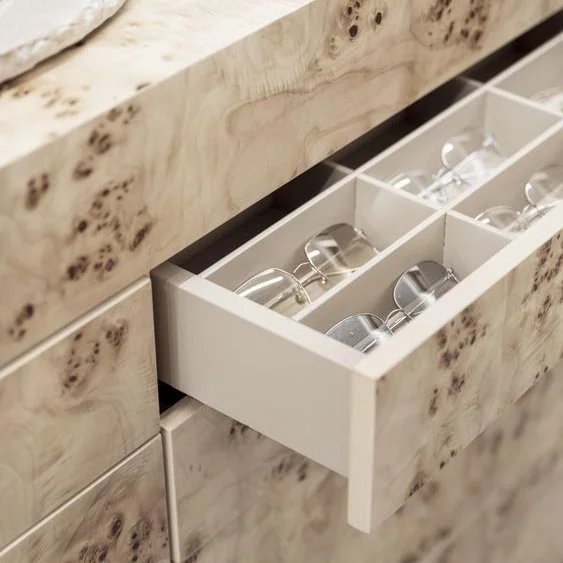
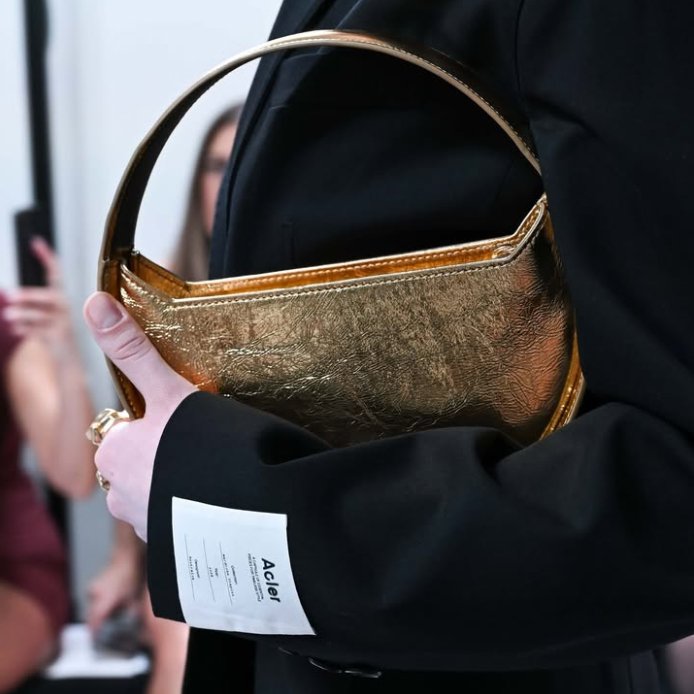
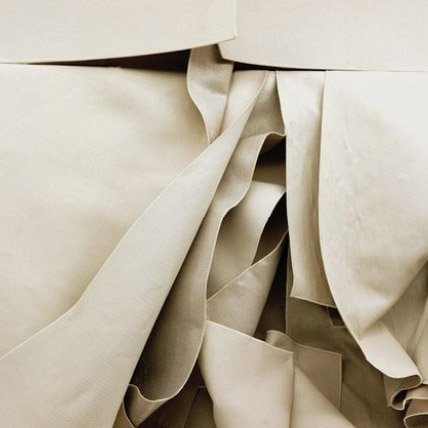

At the very start of the project, we discussed creative direction, budget and the existing space. Developing initial concepts is always energizing, however a big portion of any project is execution and communication. We had a very tight timeframe and a lean budget, so we had to be strategic to successfully execute their vision.
Here’s how we did it.
Review the brief:
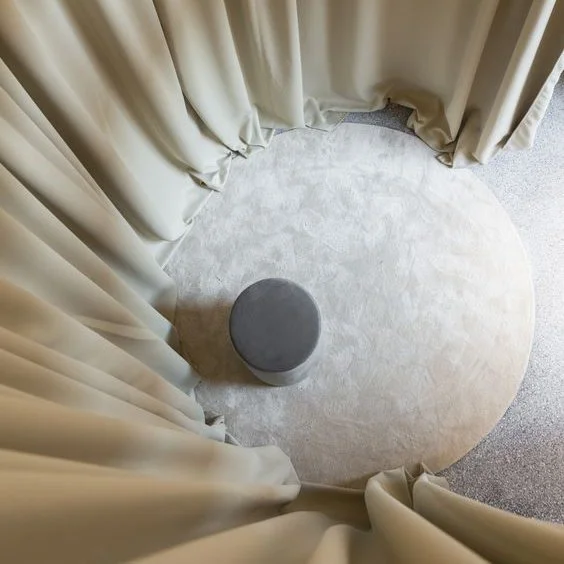
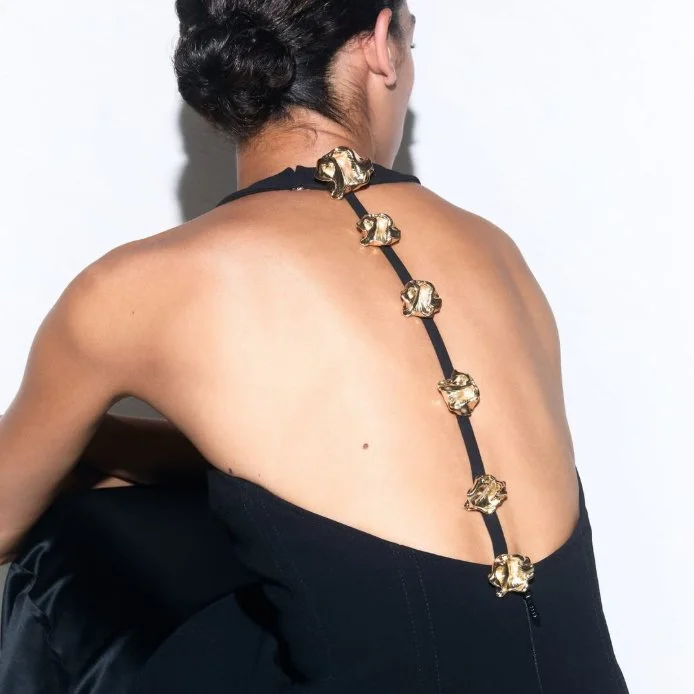
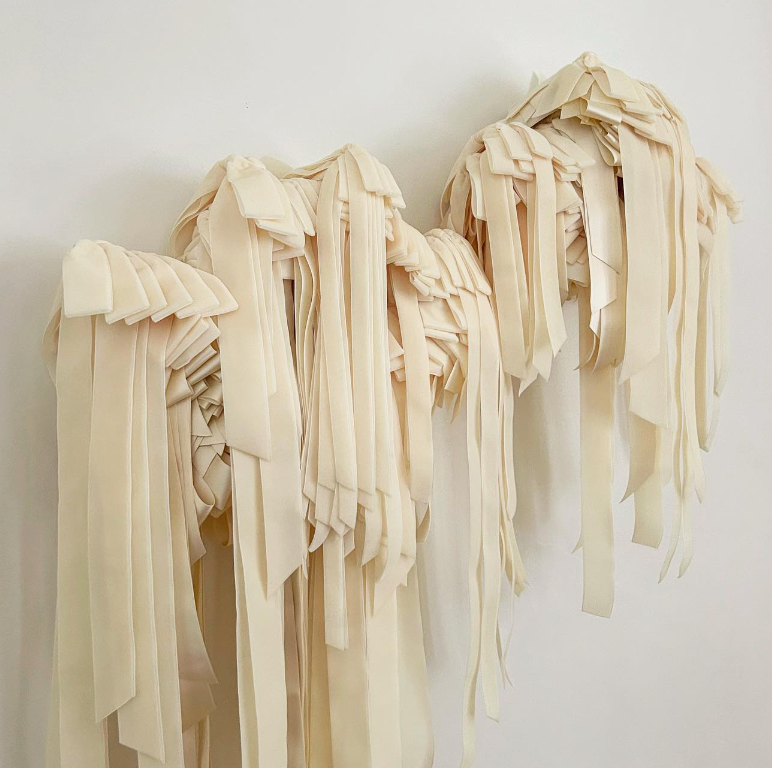
Acler had a clear idea for the space; soft, ethereal and textured. The store had to be neutral, yet not bland. They were looking to incorporate bespoke elements, and maximise hanging space for their garments. We had 2 weeks for design, 2 weeks to obtain fit out quotes and 2 weeks for construction. With such a compressed timeline, any new design elements had to be “like for like” replacement to avoid triggering heritage approval. While the aesthetic approach to the brief was important, so was the logistical component.
Inspect the space:
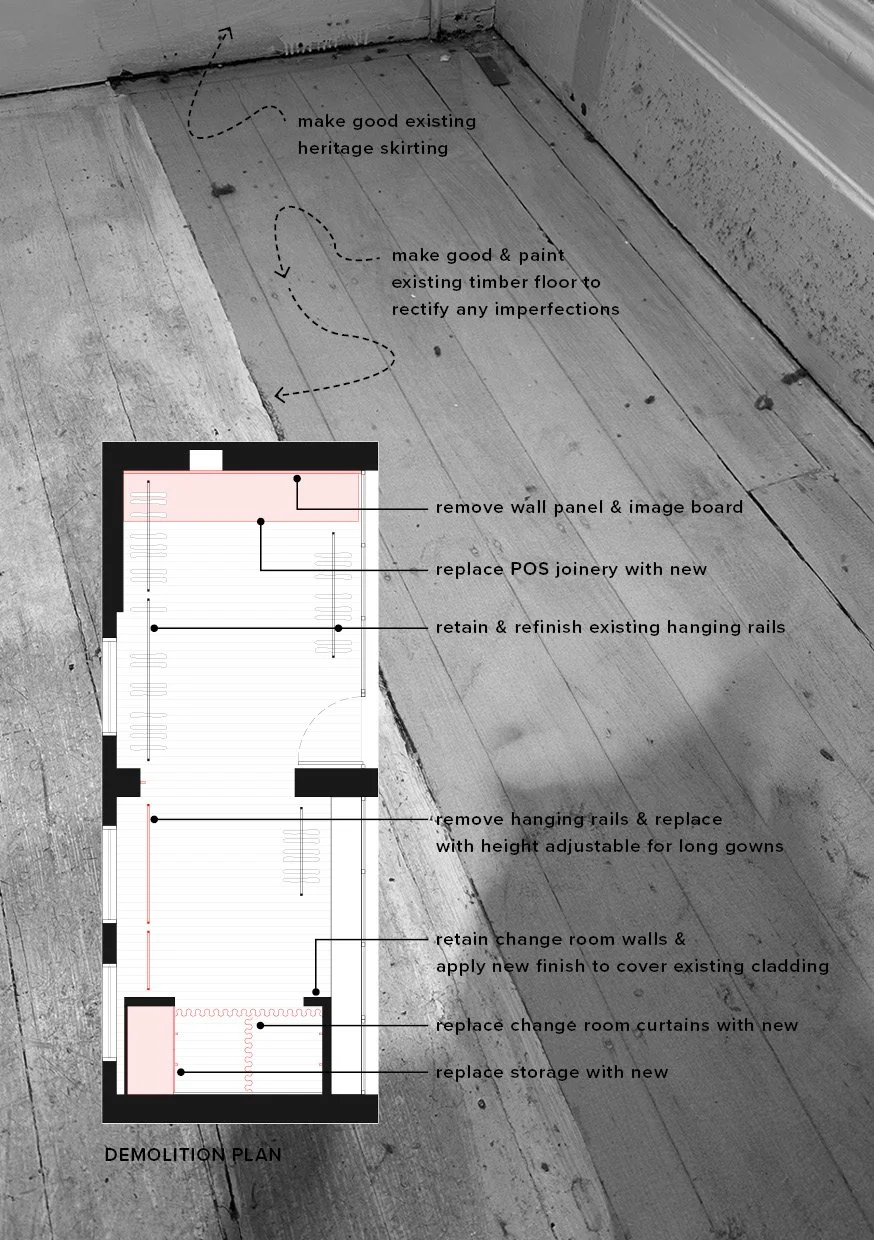
Keeping in mind the budget and timeframe, we had to be discerning when reviewing the space. It wasn’t a blank canvas, so we consider if existing elements can be repurposed to our advantage. The outgoing tenant is also a fashion brand, so the layout, hanging space and change rooms could be refreshed without being demolished. We identify where the budget should be invested and how the space can be transformed within our project parameters.
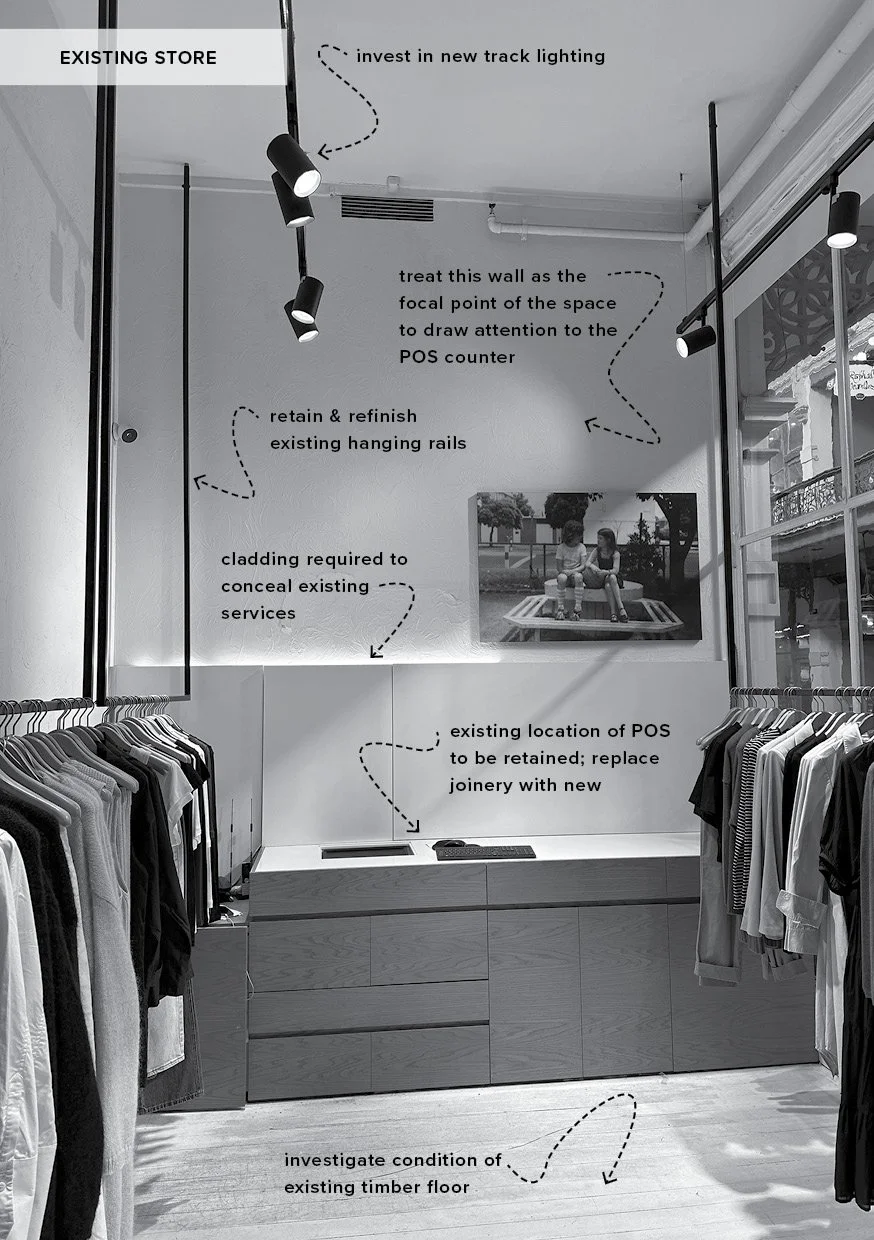
Develop and refine:
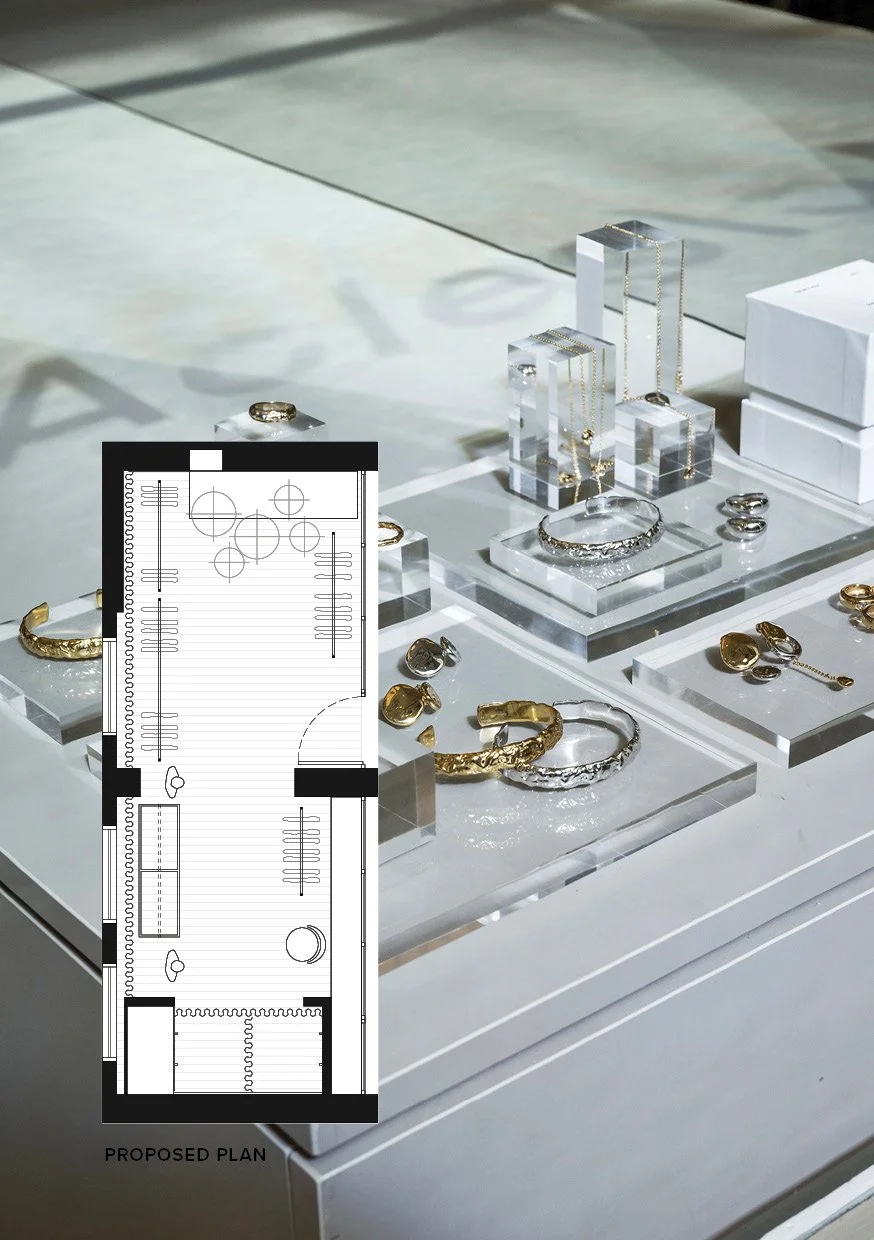
We look back at Acler’s initial mood boards and the possibilities of the site to sketch ideas, develop a finishes palette and draft the plans for the space. We realise that some ideas must be abandoned, due to budget and time constraints. However, all is not lost as we can think creatively and push our ideas to find the best solution. There is a lot of liaison and collaboration with Acler to reach the final design.
Enlist the help of go-to Suppliers:
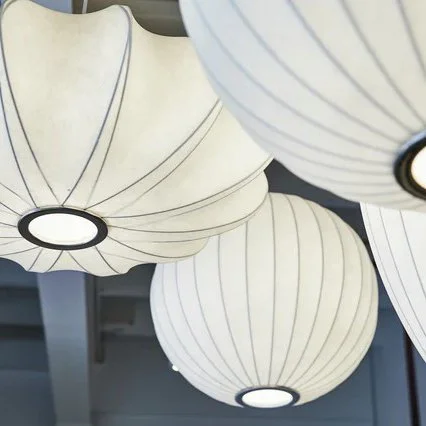
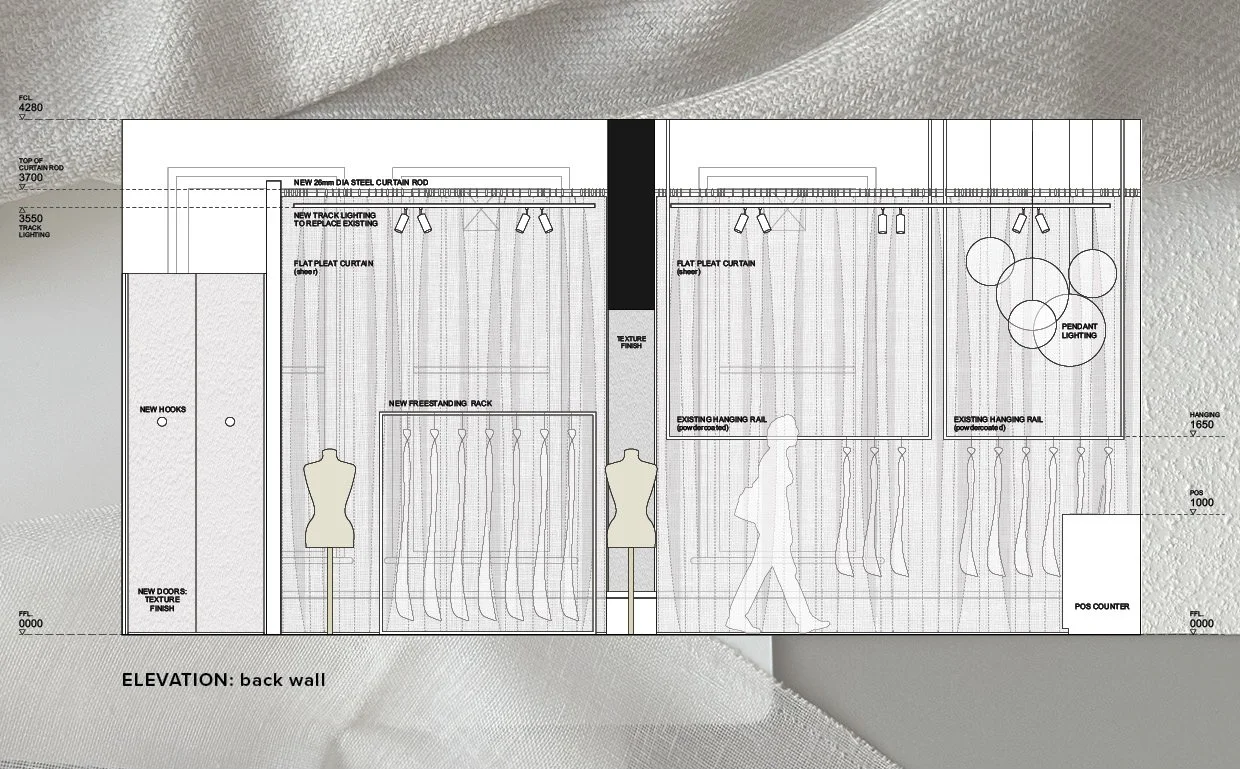
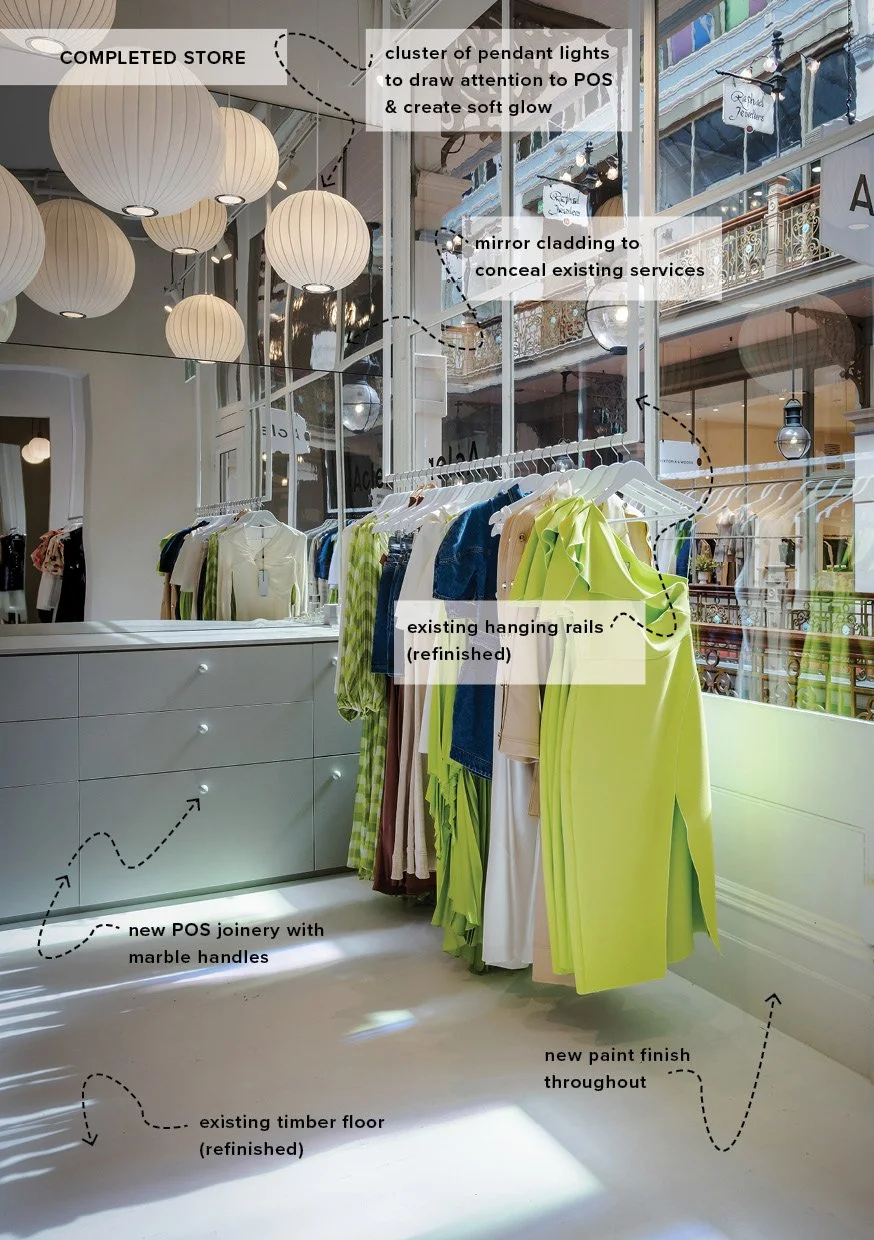
We narrow the pool of options for finishes and lighting, selecting in-stock items that can arrive to site quickly. One of the main ideas to transform the space (without triggering heritage approval) is to install a soft, semi-sheer curtain that spans the length of the store. The scale is breathtaking and functionally, it hides the imperfections of the heritage walls. We work closely with our go-to curtain supplier Kolong to select and order fabric, and finalise the fixing details. The curtain is the first item to be ordered and the last to be installed, so it’s a critical element within the overall programme.
Manage expectations:
The client, the landlord, the builder and… our own! Designing and building a store within 6 weeks is no easy feat, and we need to be realistic about what can be achieved and open to last minute changes. If we’re over budget, let’s see where we can scale back. If the workmanship isn’t great, we can flag it as a defect and try again. If the site looks a mess and nothing seems to be progressing, let’s chat with the builder to confirm we’re on track. We like to communicate with everyone at every stage to keep expectations in check.
There’s a lot that happens behind the scenes after establishing the aesthetic direction of the interior; the “fun design part” is often a very small portion of a much larger process. Understanding the site conditions, feasibility of design ideas and allocation of budget is paramount to a successful project. An experienced designer can develop concepts, refine and bring together a team to execute the vision.