
Key Considerations for Heritage Spaces
How heritage constraints can influence the design outcome.
Over the last 10 years, I’ve had the pleasure of designing retail interiors in beautiful heritage buildings such as The Strand Arcade, Queen Victoria Building and most recently, King George Chambers.
With each project came its own set of challenges and unexpected solutions, which can be traced back to the heritage constraints of the space. In my experience, the design can be shaped and often benefit by these limitations because it gives you parameters to work with. You’re not starting with a pure blank canvas, but rather, a layered history and specific elements that need to be incorporated into your design.
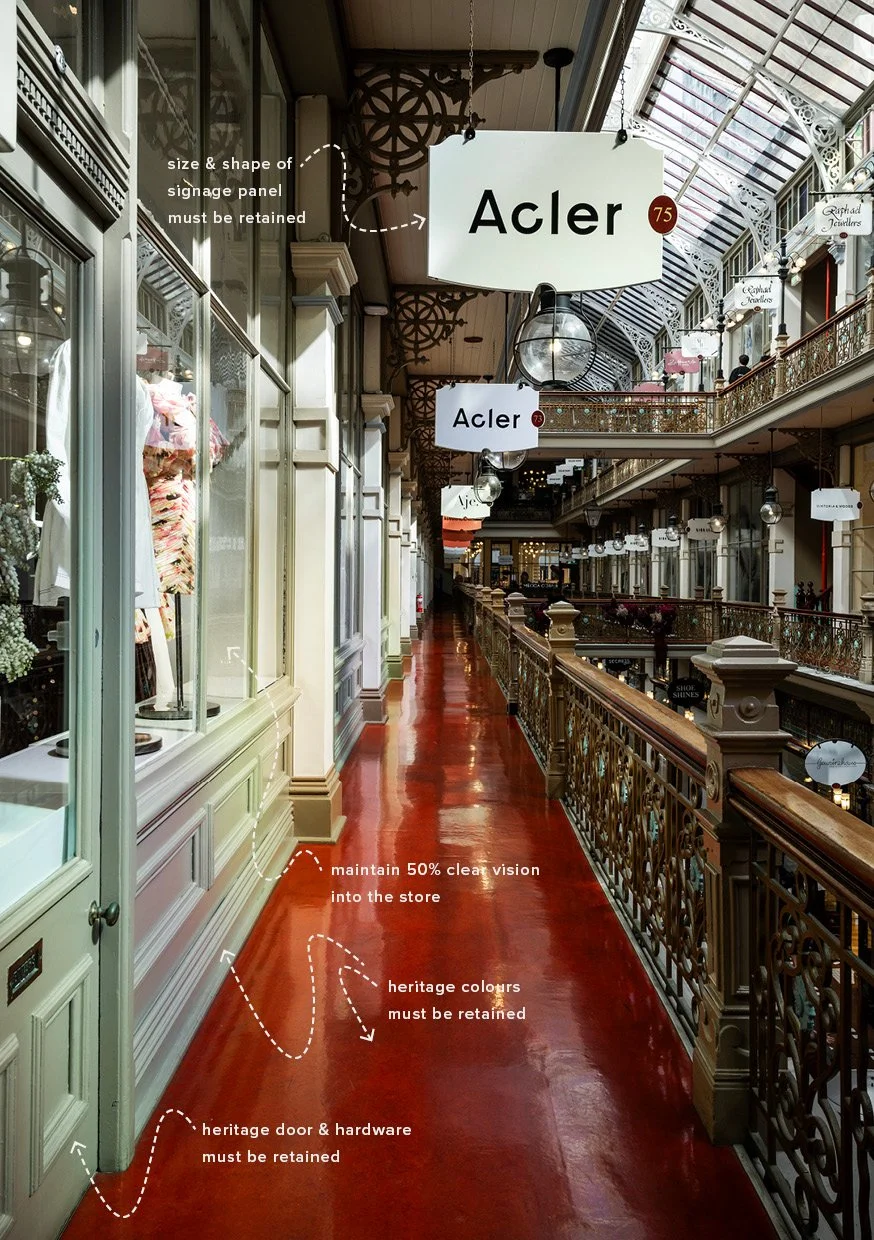
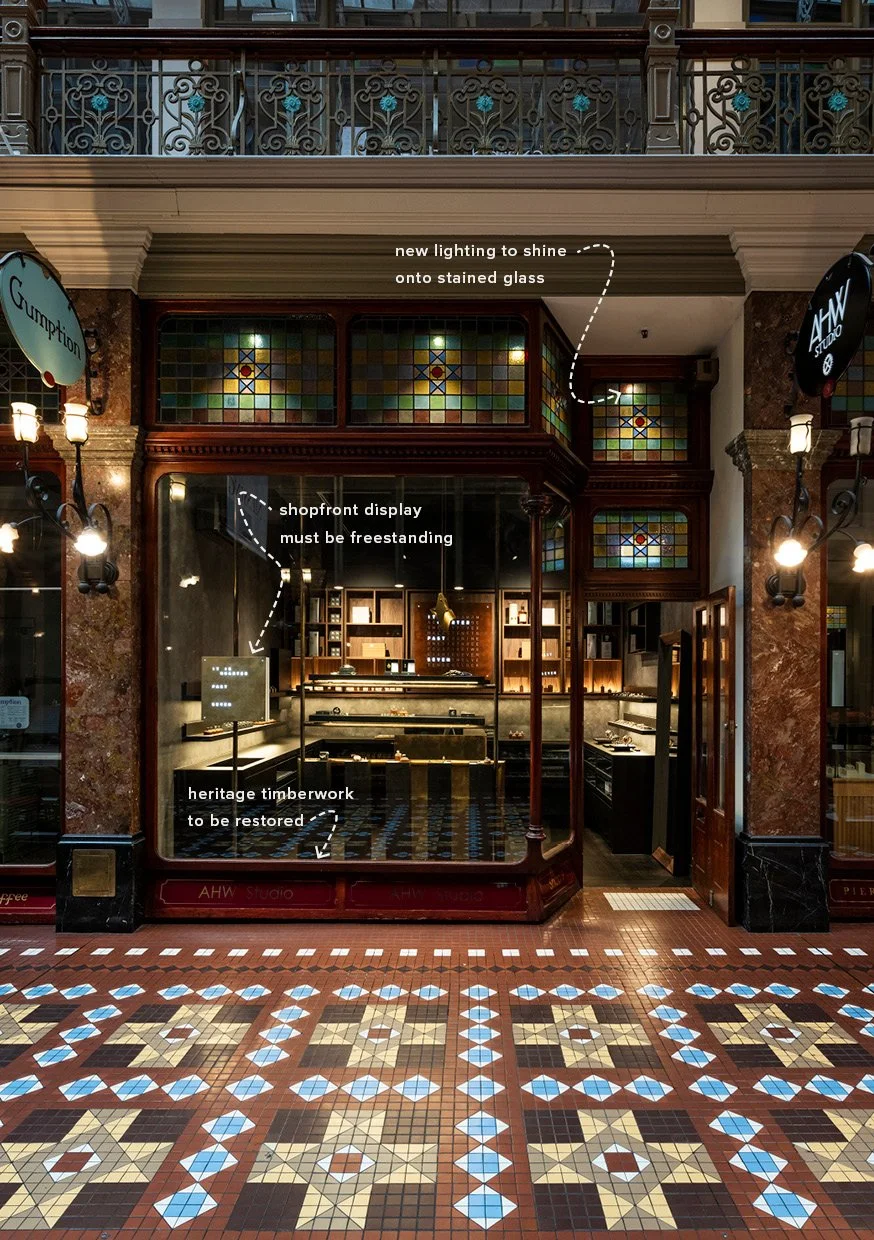
So, how do we do this? How do we retain heritage, but also design something new?
Here are the key points that I consider throughout my design process for retail, hospitality and commercial interiors.
Seek advice. Find out what you can from the people who are familiar with the building. Enquire with Centre Management, the Retail Design Manager, Tenancy Delivery Manager and above all else, a Heritage Consultant. You need to establish what exactly is heritage, and the items that can’t be touched, demolished or altered. A Heritage Consultant is an independent expert that will be an additional cost to your project; however, they are invaluable in providing critical information at the very beginning of the design process.
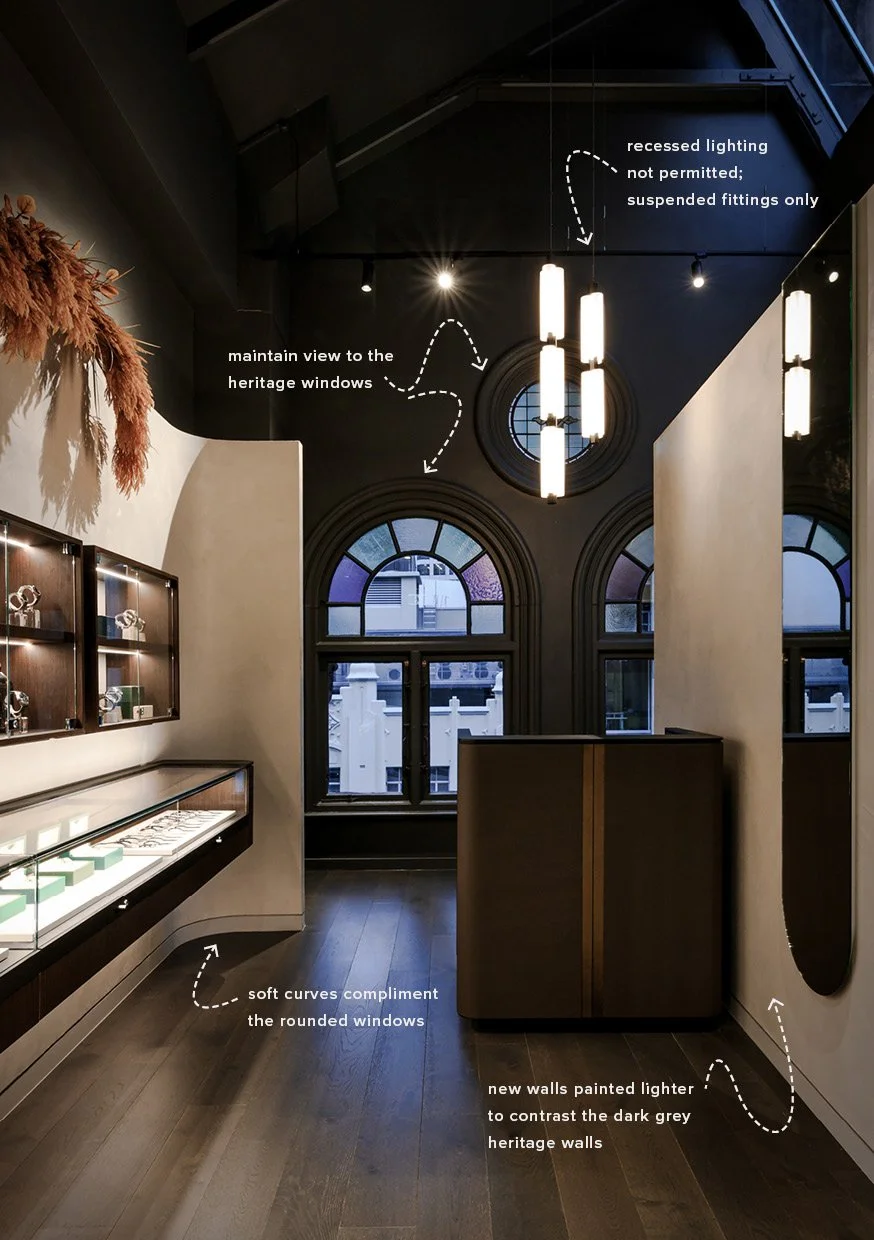
Respect what’s there. Existing heritage elements can often be a springboard for ideas, concepts or finishes. Can you draw inspiration from the shape of the heritage windows, pull a colour palette from the stained glass or create an idea inspired by the decorative plaster? This is not a hard and fast starting point, but limitations and working with existing elements can often push you to think more creatively. You’ve also signed a lease or purchased a heritage space, so embrace it!
Work with experts. Specialist trades can help to repair and restore heritage items that need some TLC. Never underestimate the experience they can bring to the site. Retaining heritage elements can add richness to your design and that ‘special something’ when they can be restored to their former glory. If leasing a space, it might be within your agreement to restore heritage items, so budget accordingly.
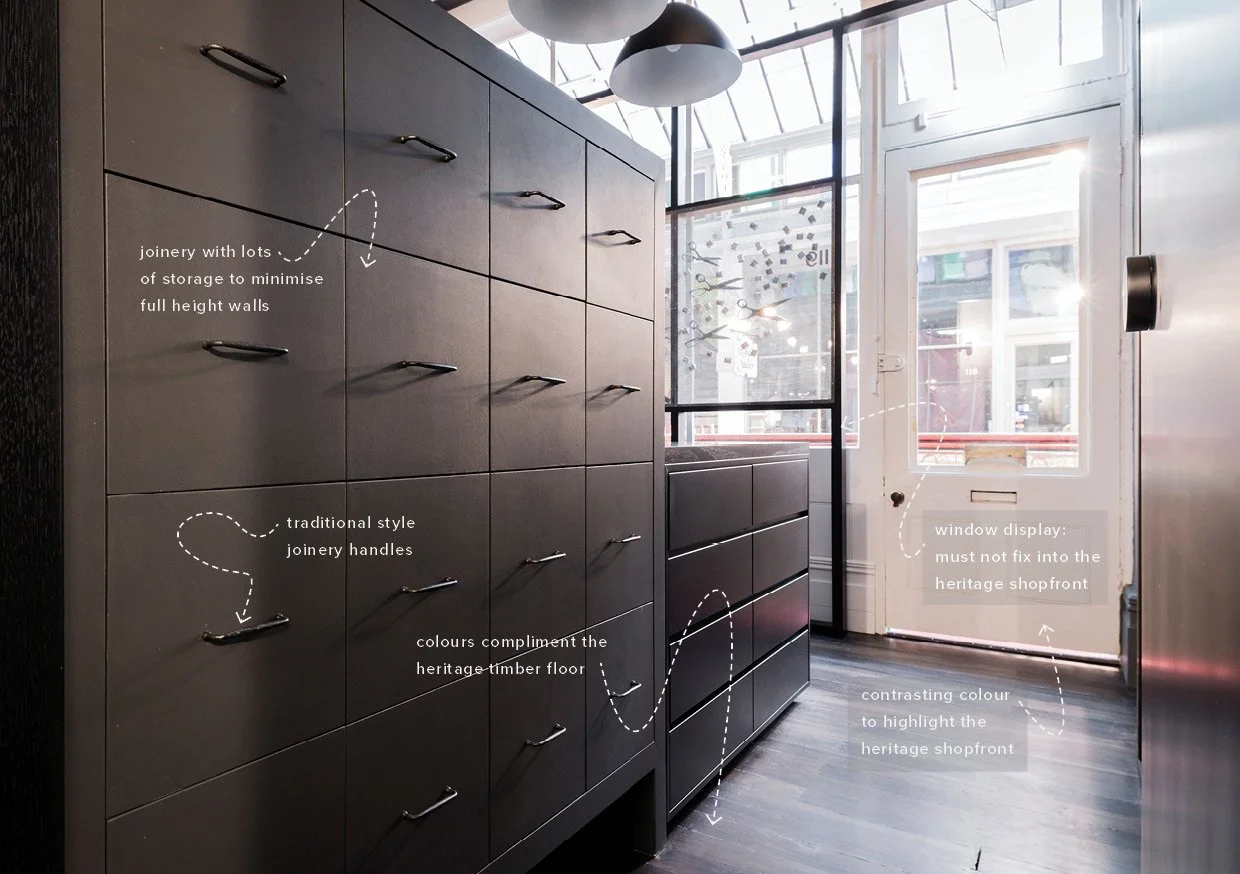
Consider the little things. Lighting, fixing details, complimenting colours; it’s these smaller details that can take a design from good to great. You may have a heritage ceiling that can’t be punctured, so you need to specify only suspended light fittings – how does this affect the illumination of the interior? Is there a beautiful window that should become the focal point of the space? How will you fix shelving and conceal services if the entire wall is heritage listed? A thoughtful approach can lead to unexpected outcomes and refined details.
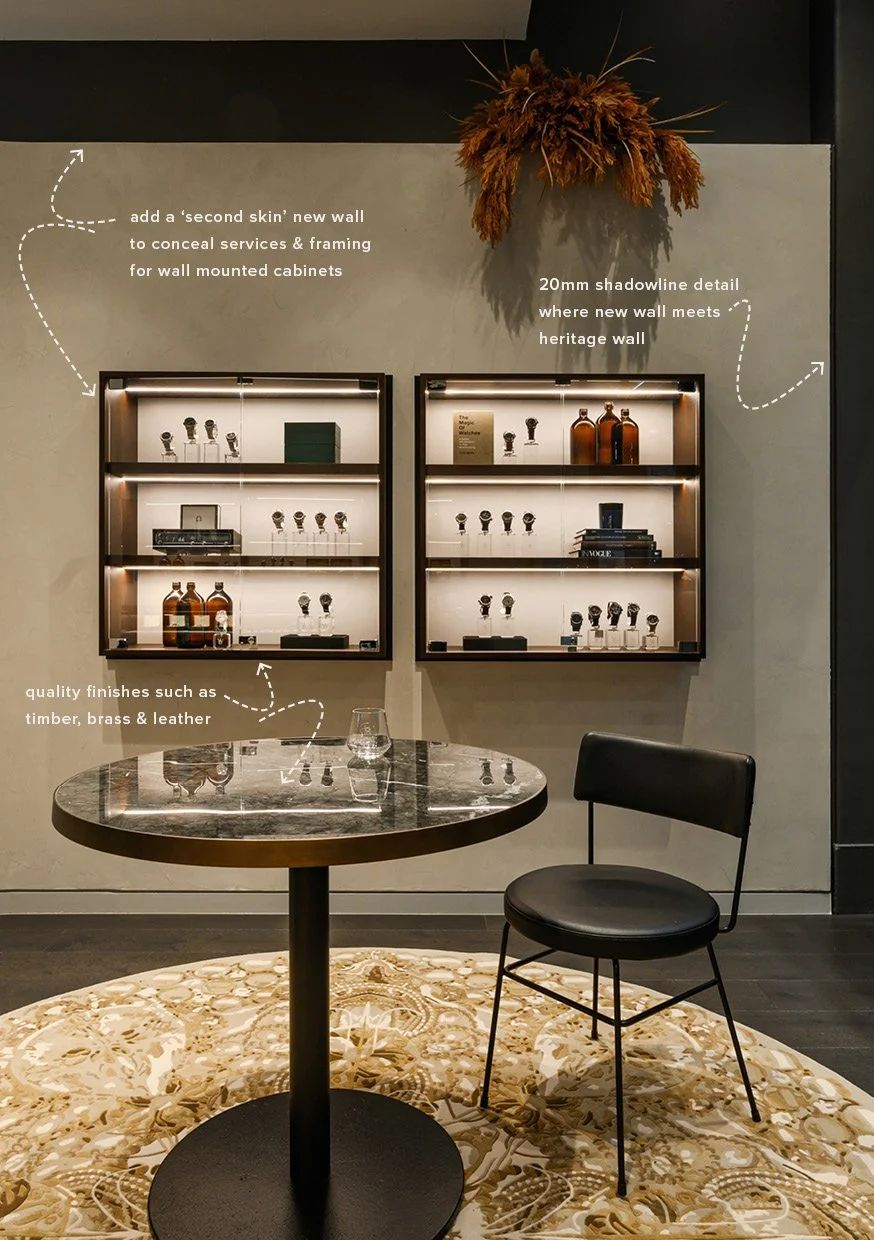
Think about finishes. In heritage buildings such as The Strand Arcade and QVB, the new design must use “real” finishes such as timber, marble, terrazzo and polished plaster. This is to maintain the authenticity and beautiful natural qualities that already exist in the building. “Fake” finishes such as timber-look laminates, vinyl flooring and imitation marble are not permitted and highly discouraged. This can narrow your pool of options and impact your budget. Even if your space doesn’t have restrictions for new finishes, it’s important to consider how your palette will compliment or contrast the heritage of the building.

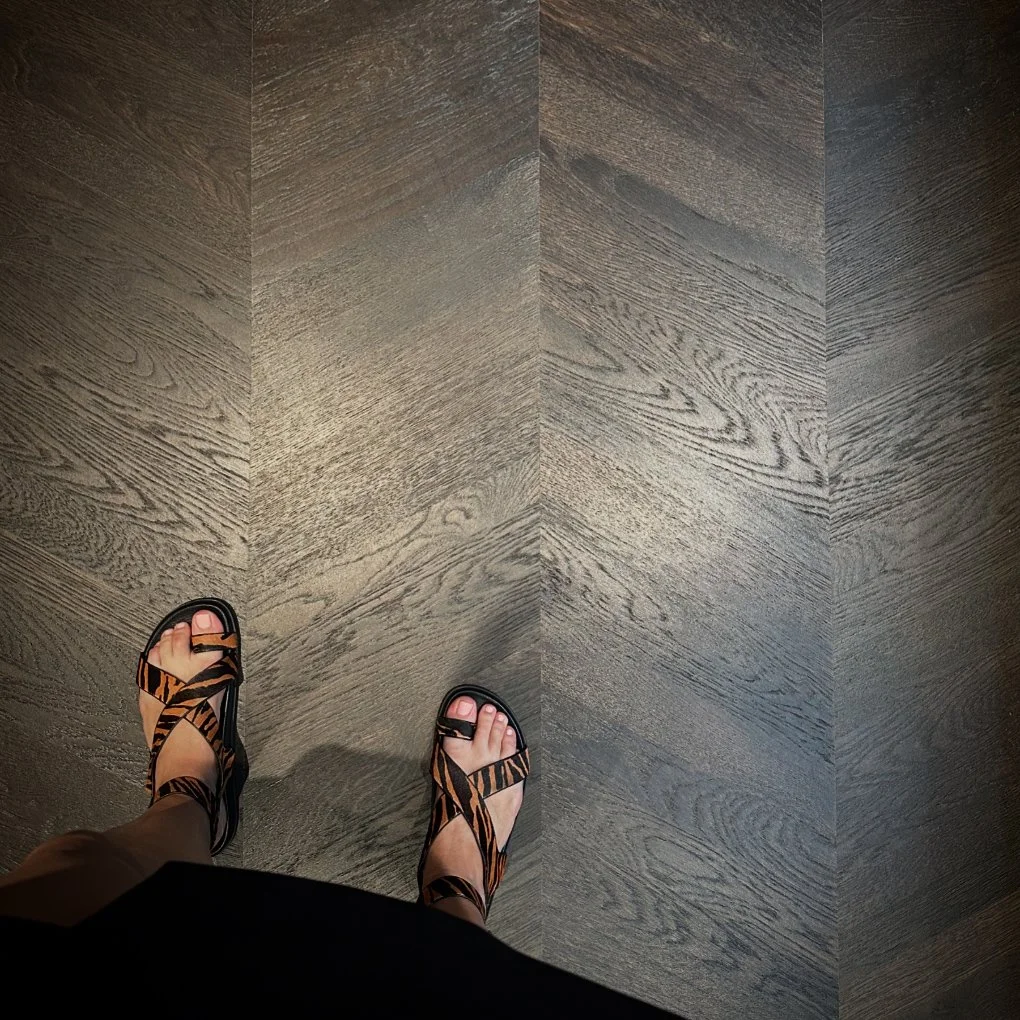
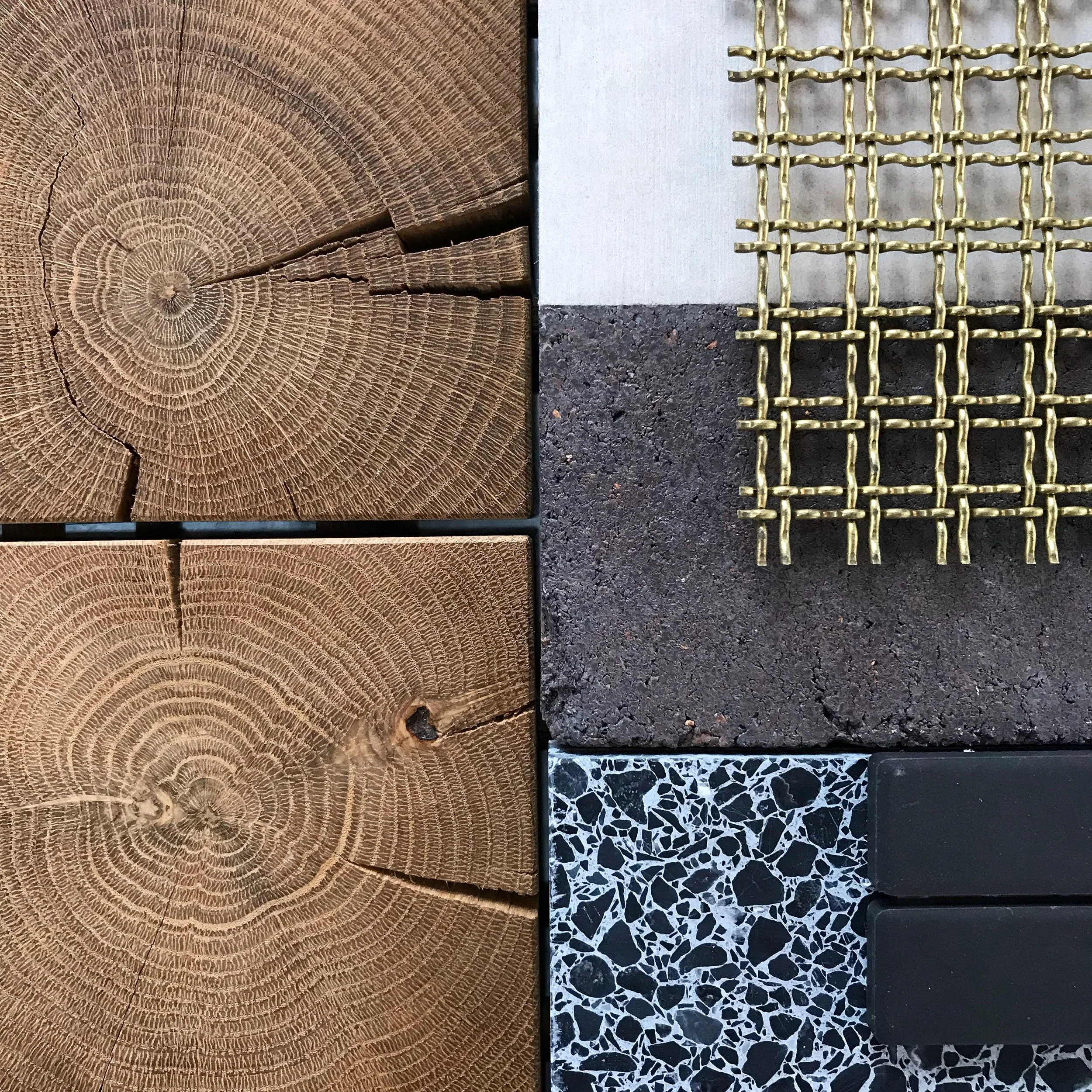
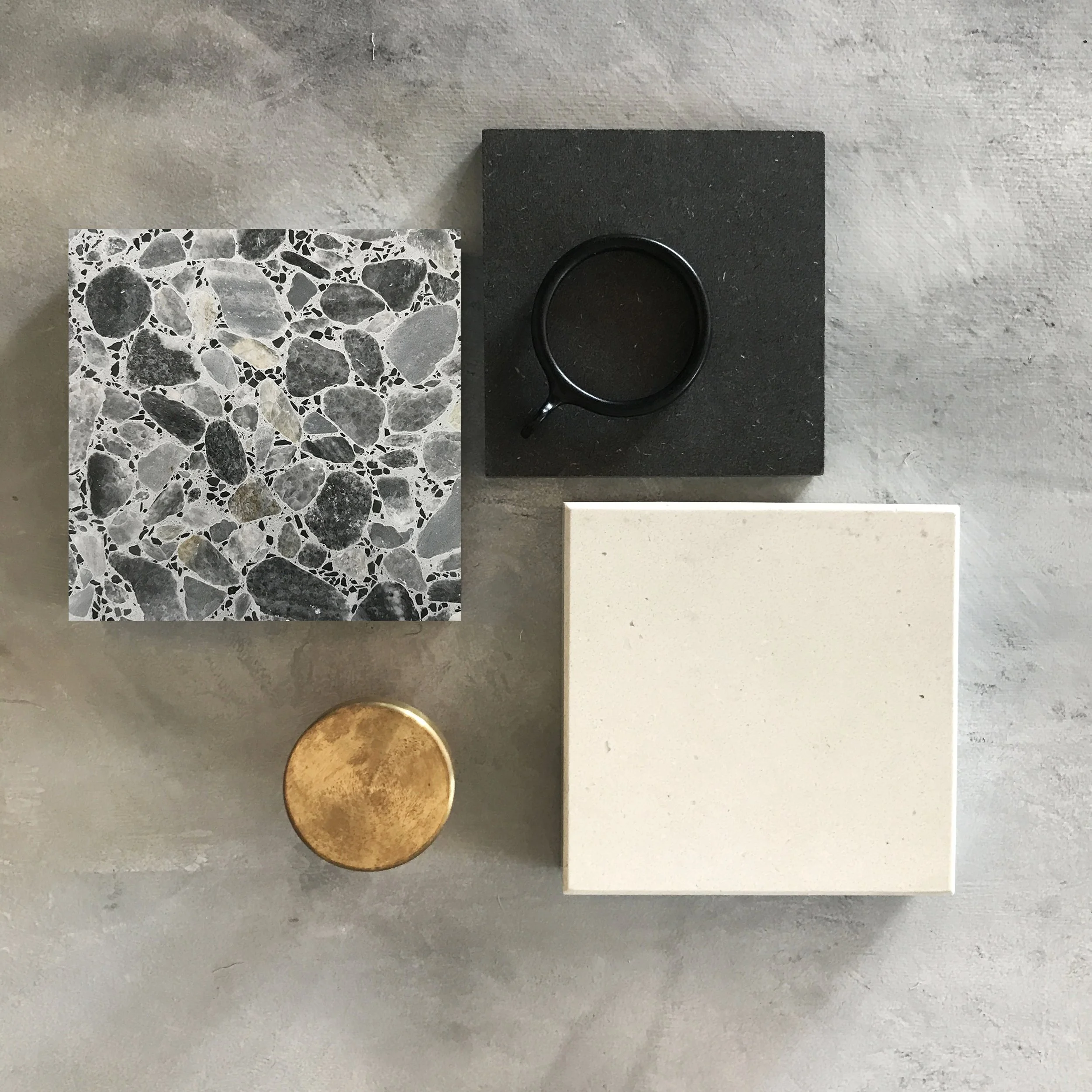
Designing a space within a heritage building can be equal parts exciting and intimidating, however the result can be extra special because of the thought and work that has gone into it. Heritage spaces can be a little askew and weathered, but that doesn’t make them any less beautiful. It can be refreshing to work with a space that’s not a blank canvas or white box to begin with. A great designer can help you get the most of the space and achieve an outcome that is truly unique.